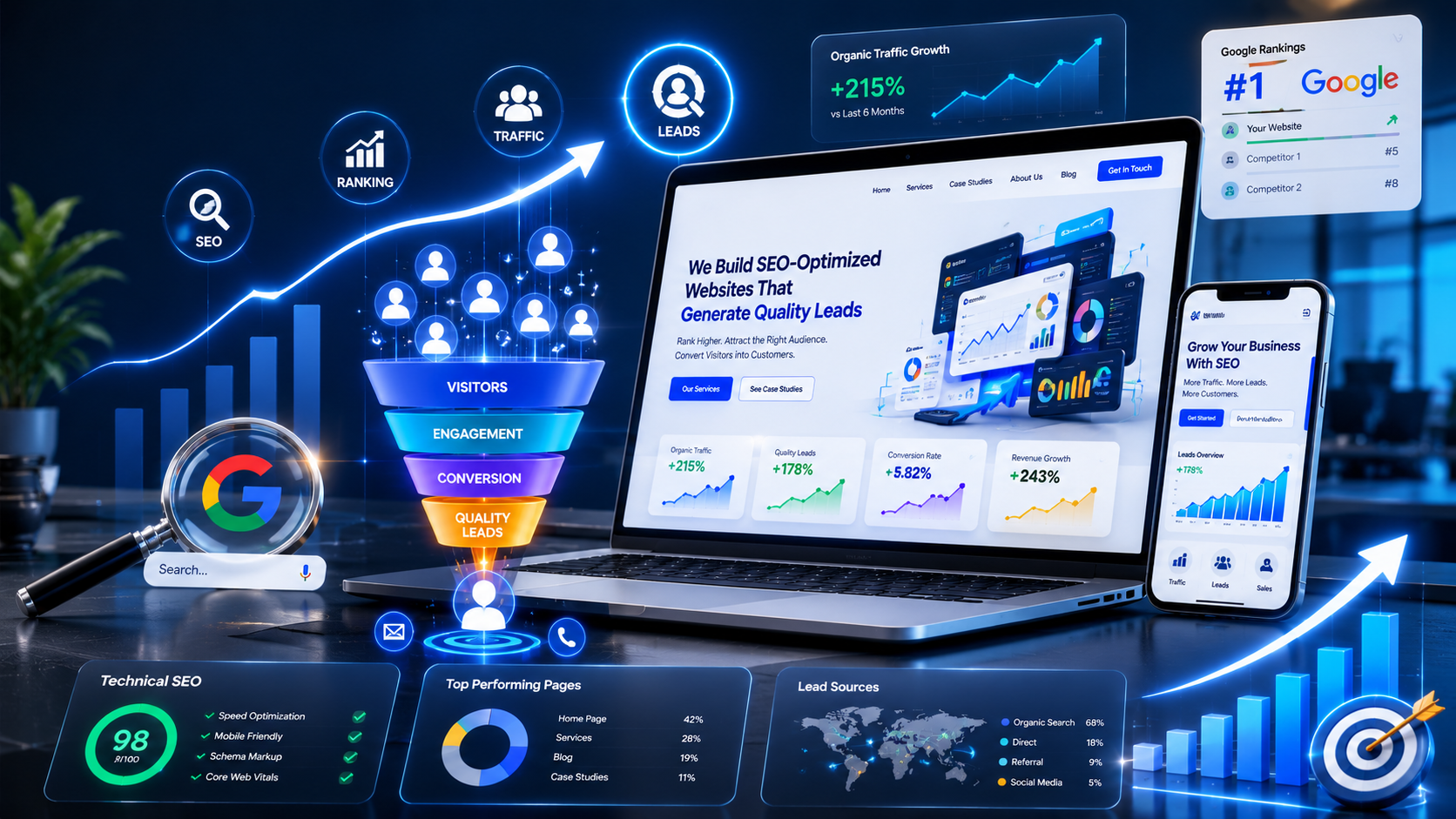
How SEO-Optimized Websites Help Businesses Generate Quality
SEO-optimized websites help businesses improve search visibility, attract qualified traffic, increase customer trust, and generate long-term lead opportunities.
Introduction
Modern businesses need more than visually attractive websites. In 2026, websites must function as strategic business growth systems capable of attracting customers, improving visibility, generating leads, and supporting long-term digital success.
Many businesses create websites that look professional but fail to generate meaningful business results because they lack proper SEO optimization and conversion-focused structure.
An SEO-optimized website helps businesses:
- rank on Google,
- attract targeted visitors,
- improve customer trust,
- increase engagement,
- and generate high-quality leads.
Unlike traditional static websites, SEO-focused websites are designed strategically to support:
- search visibility,
- customer acquisition,
- and scalable business growth.
Businesses investing in SEO website development create stronger digital foundations for long-term competitiveness and lead generation.
What Is an SEO-Optimized Website?
An SEO-optimized website is a website designed and structured to perform effectively in search engines while also providing excellent user experience and conversion opportunities.
SEO website optimization includes:
- keyword optimization,
- technical SEO,
- fast loading speed,
- mobile responsiveness,
- optimized content,
- internal linking,
- metadata optimization,
- and user-friendly structure.
SEO-focused websites help search engines understand:
- business relevance,
- content quality,
- and website authority.
Well-optimized websites improve:
- rankings,
- traffic,
- engagement,
- and lead generation.
Why Traditional Websites Often Fail
Many business websites fail because they focus only on appearance without considering:
- SEO,
- customer behavior,
- search intent,
- and conversion strategy.
Common problems include:
- weak keyword targeting,
- slow performance,
- poor mobile experience,
- missing technical SEO,
- low-quality content,
- and lack of conversion structure.
Websites without optimization often struggle to:
- rank on Google,
- attract organic traffic,
- and generate inquiries.
A professional website should function as a business growth asset rather than just an online brochure.
SEO Improves Search Visibility
One of the biggest advantages of SEO-optimized websites is improved Google visibility.
Businesses appearing higher in search results gain:
- more traffic,
- increased exposure,
- stronger authority,
- and more customer opportunities.
SEO optimization helps websites rank for:
- business services,
- customer searches,
- industry keywords,
- and local search queries.
Businesses invisible on search engines often lose customers to competitors with stronger SEO strategies.
Search visibility directly affects lead generation potential.
SEO Attracts Targeted Organic Traffic
SEO helps businesses attract visitors actively searching for:
- products,
- services,
- solutions,
- or business information.
This targeted traffic is highly valuable because users already demonstrate intent and interest.
SEO-generated visitors often produce:
- higher engagement,
- stronger conversion potential,
- and better-quality leads.
Organic traffic also supports long-term growth without continuous advertising expenses.
Professional Websites Build Customer Trust
Customers evaluate businesses based on digital presentation.
Professional SEO-optimized websites improve:
- credibility,
- trust,
- authority,
- and business reputation.
Modern users expect:
- fast websites,
- professional design,
- mobile responsiveness,
- clear information,
- and smooth user experience.
Businesses with outdated or poorly optimized websites may appear:
- unreliable,
- less professional,
- or inactive.
Trust strongly influences conversion decisions.
Mobile Optimization Increases Engagement
Most users browse websites through smartphones.
Responsive SEO websites improve:
- accessibility,
- readability,
- navigation,
- and engagement across devices.
Google also prioritizes mobile-friendly websites through mobile-first indexing.
Businesses without responsive design risk:
- poor rankings,
- high bounce rates,
- and reduced customer engagement.
Mobile optimization has become essential for modern SEO performance.
Website Speed Affects Conversions
Slow websites negatively affect:
- SEO rankings,
- customer experience,
- and lead generation.
Users expect websites to load quickly.
Fast-loading websites improve:
- engagement,
- retention,
- and conversion opportunities.
SEO optimization includes:
- image compression,
- code optimization,
- caching,
- and technical performance improvements.
Website speed directly influences digital business performance.
Conversion-Focused Structure Generates Leads
SEO websites should guide users toward meaningful actions.
Effective lead generation websites include:
- contact forms,
- consultation requests,
- inquiry systems,
- service pages,
- and strategic CTAs.
Clear conversion pathways improve:
- customer interaction,
- inquiry rates,
- and lead quality.
SEO traffic becomes more valuable when websites are optimized for conversions.
Content Marketing Supports SEO Growth
Educational content is essential for SEO-driven lead generation.
Businesses publishing valuable articles can rank for:
- customer questions,
- service-related keywords,
- industry topics,
- and informational searches.
Content marketing improves:
- topical authority,
- engagement,
- visibility,
- and customer trust.
SEO blogs create long-term ranking opportunities while helping businesses educate potential customers.
Technical SEO Strengthens Website Performance
Technical SEO helps search engines crawl and understand websites more effectively.
Important technical SEO factors include:
- secure HTTPS,
- optimized site structure,
- XML sitemaps,
- schema markup,
- internal linking,
- and crawl optimization.
Technical improvements enhance:
- indexing,
- rankings,
- and website health.
Strong technical foundations support long-term SEO growth.
Internal Linking Improves Authority
Internal linking helps connect related content and distribute SEO authority across websites.
Businesses should strategically link:
- blogs,
- service pages,
- consultation pages,
- and educational resources.
Internal linking improves:
- crawlability,
- session duration,
- user navigation,
- and topical relevance.
Strong internal linking structures improve overall website SEO performance.
SEO Websites Create Long-Term Digital Assets
Unlike paid advertising campaigns that stop generating traffic after budgets end, SEO websites continue attracting visitors over time.
Well-optimized websites become:
- long-term lead generation assets,
- digital authority platforms,
- and sustainable traffic sources.
Businesses consistently improving SEO often experience:
- cumulative ranking growth,
- stronger visibility,
- and scalable customer acquisition.
SEO-focused websites provide long-term business value.
SEO Helps Small Businesses Compete
SEO allows small and medium businesses to compete more effectively online.
Businesses with strong optimization strategies can rank against larger competitors through:
- niche targeting,
- Local SEO,
- content marketing,
- and customer-focused educational content.
SEO creates opportunities for businesses to increase visibility even in competitive industries.
The Future of Business Websites
Modern websites are evolving into:
- intelligent lead systems,
- customer engagement platforms,
- automation ecosystems,
- and digital growth infrastructures.
Future-ready websites integrate:
- SEO,
- automation,
- analytics,
- AI tools,
- and scalable digital architecture.
Businesses investing in SEO-focused website development position themselves for stronger long-term competitiveness.
Conclusion
SEO-optimized websites are essential for modern businesses seeking long-term visibility, lead generation, customer trust, and digital growth. Businesses relying on outdated or non-optimized websites often struggle to attract traffic and convert visitors into customers.
Professional SEO website development combines:
- search optimization,
- user experience,
- technical performance,
- and conversion strategy
to create scalable digital business growth systems.
Businesses investing in SEO-friendly websites build stronger digital authority and sustainable customer acquisition channels.
NexivaGen Technologies helps businesses develop professional SEO-optimized websites designed for visibility, customer engagement, lead generation, and long-term digital success.
Frequently Asked Questions
Frequently Asked Questions (FAQ)
What is an SEO-optimized website?
An SEO-optimized website is designed to rank better on search engines while improving user experience and lead generation.
How do SEO websites generate leads?
SEO websites attract targeted organic traffic and guide users through conversion-focused structures such as inquiry forms and CTAs.
Why is website speed important for SEO?
Fast websites improve user experience, rankings, engagement, and conversion rates.
Does mobile optimization affect SEO?
Yes. Google prioritizes mobile-friendly websites through mobile-first indexing.
What is technical SEO?
Technical SEO involves optimizing website infrastructure for better indexing, crawlability, and search performance.
Why is content important for SEO websites?
Educational content improves topical authority, rankings, engagement, and organic traffic growth.
Can small businesses benefit from SEO websites?
Absolutely. SEO helps SMEs increase visibility, compete online, and generate targeted leads.
How long does SEO website growth take?
SEO is a long-term strategy. Consistent optimization and content development improve results over time.