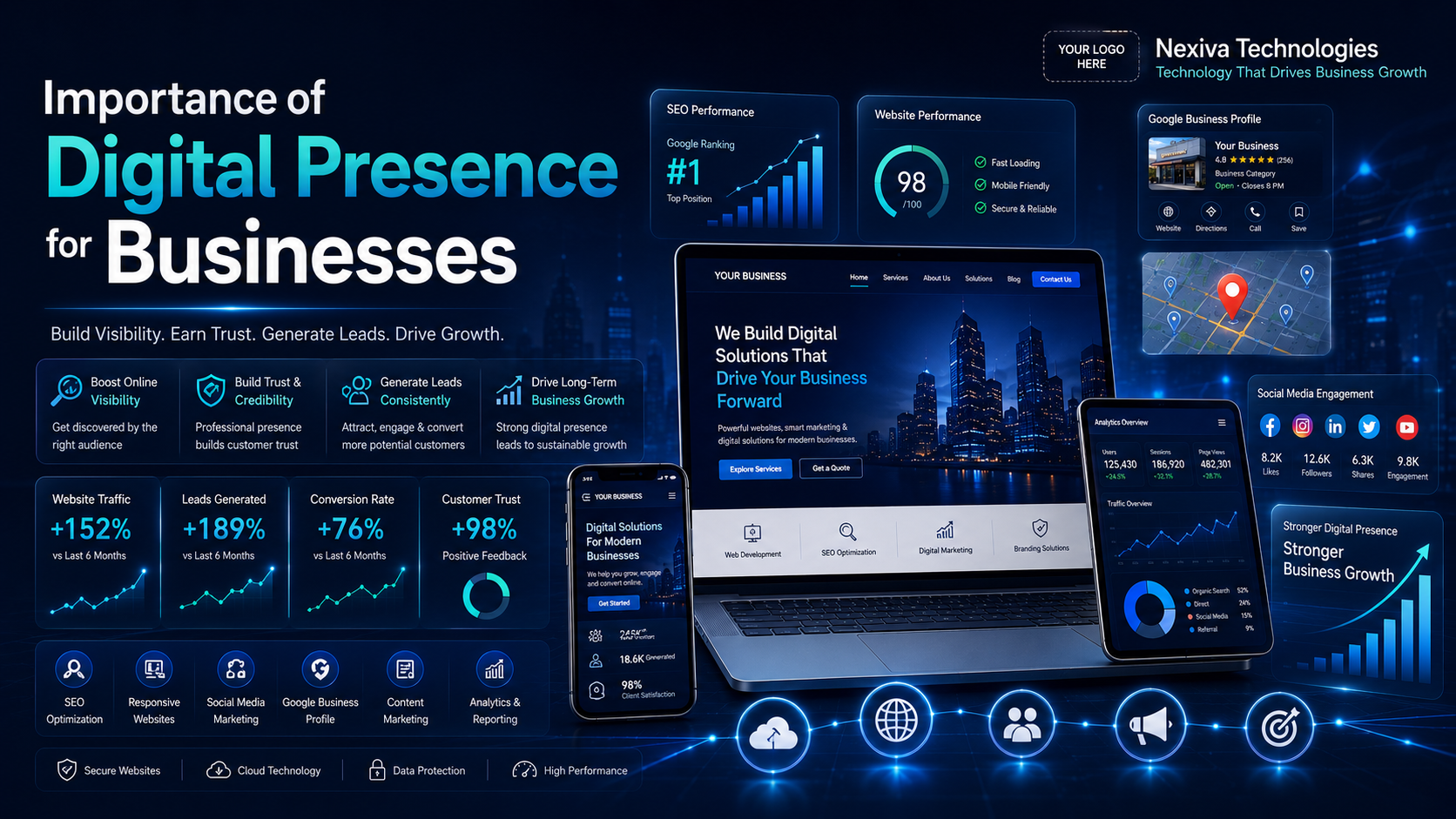
Why Businesses Need Websites Beyond Social Media
Social media helps businesses gain visibility, but professional websites provide long-term control, SEO growth, credibility, and lead generation. Learn why businesses need both for sustainable digital success.
Introduction
In today’s digital business environment, many companies rely heavily on social media platforms to promote services, connect with customers, and build brand visibility. Platforms like Facebook, Instagram, LinkedIn, and YouTube have become powerful marketing channels for businesses of all sizes.
However, a common misconception among many growing businesses is that social media alone is enough to build a sustainable digital presence.
While social media plays an important role in visibility and audience engagement, professional websites remain the foundation of long-term digital business growth. Businesses that depend entirely on social media often face limitations in branding, control, SEO visibility, customer trust, and lead generation.
In 2026, businesses need both a professional website and a strategic social media presence to build scalable and sustainable growth.
The Role of Social Media in Business Growth
Social media platforms help businesses:
- increase visibility,
- engage with audiences,
- promote services,
- share updates,
- and build community interaction.
Social media is highly effective for:
- brand awareness,
- audience engagement,
- content promotion,
- and short-term marketing campaigns.
Businesses can use social media to:
- showcase products,
- communicate with customers,
- run advertisements,
- and drive traffic to websites.
For modern businesses, social media is an important marketing and communication channel.
The Limitations of Social Media-Only Businesses
Although social media offers valuable exposure, relying solely on social media platforms creates several long-term risks.
Businesses operating only through social media often face:
- limited brand control,
- reduced credibility,
- dependency on platform algorithms,
- poor search engine visibility,
- and limited lead generation capabilities.
Social media platforms are rented digital spaces. Businesses do not fully control:
- algorithms,
- visibility,
- account policies,
- or audience reach.
Changes in platform rules or declining organic reach can significantly affect business visibility.
This creates instability for businesses relying entirely on social media for growth.
Why Professional Websites Matter
A professional website acts as the digital foundation of a business.
Unlike social media platforms, websites provide businesses with:
- full ownership,
- brand control,
- SEO visibility,
- lead generation systems,
- customer trust,
- and scalability.
A website allows businesses to present information professionally while creating a centralized digital presence for customers.
Modern customers often expect businesses to have:
- professional websites,
- detailed service information,
- company credibility,
- contact accessibility,
- and secure online experiences.
Businesses without websites may appear less established or less trustworthy.
Websites Improve Business Credibility
Trust plays a major role in customer decision-making.
A professionally designed website helps businesses establish:
- legitimacy,
- professionalism,
- reliability,
- and authority.
Customers often research businesses online before making inquiries or purchases. A professional website provides:
- company information,
- service details,
- portfolios,
- testimonials,
- case studies,
- and contact options.
This transparency improves customer confidence and strengthens brand reputation.
Social media profiles alone rarely provide the same level of credibility and structured information.
Websites Support SEO and Organic Growth
One of the biggest advantages of websites is search engine visibility.
Professional websites can rank on Google for:
- business services,
- industry keywords,
- local searches,
- educational content,
- and customer queries.
SEO allows businesses to generate long-term organic traffic without depending entirely on paid advertisements or social media algorithms.
Businesses using SEO-friendly websites gain:
- increased visibility,
- long-term traffic,
- lead generation opportunities,
- and stronger online authority.
Social media posts typically have short visibility lifespans, while website content can continue generating traffic for years.
Websites Generate Better Leads
Websites provide structured lead generation opportunities through:
- contact forms,
- landing pages,
- consultation requests,
- inquiry systems,
- and service-specific pages.
Unlike social media platforms where users may scroll quickly through content, websites guide visitors through organized information and conversion-focused experiences.
Businesses can also track customer behavior and optimize conversion strategies through website analytics.
Professional websites improve lead quality by attracting users actively searching for specific services or solutions.
Social Media Works Best as a Traffic Channel
The most effective digital strategy is not choosing between websites and social media — it is integrating both strategically.
Social media should act as:
- a visibility channel,
- a content distribution platform,
- and a traffic source.
Websites should act as:
- the business headquarters,
- the conversion platform,
- the SEO engine,
- and the trust-building system.
Businesses using social media to drive visitors toward professional websites create stronger long-term digital ecosystems.
Websites Provide Long-Term Stability
Social media platforms constantly change algorithms and policies, affecting business visibility.
Businesses depending entirely on social platforms risk:
- declining reach,
- account restrictions,
- content limitations,
- and audience instability.
A professional website provides long-term digital ownership and stability.
Businesses fully control:
- content,
- branding,
- SEO strategy,
- lead systems,
- and customer experience.
This makes websites a far more sustainable long-term business asset.
Websites Improve Branding and Professional Identity
A website allows businesses to create unique brand experiences.
Professional websites support:
- custom branding,
- visual identity,
- business positioning,
- and customer experience design.
Businesses can create:
- personalized layouts,
- professional messaging,
- service-focused structures,
- and branded customer journeys.
Social media platforms offer limited customization compared to websites.
Strong branding improves customer recognition, trust, and business differentiation.
Mobile-Friendly Websites Enhance User Experience
Modern websites are optimized for:
- smartphones,
- tablets,
- and desktop devices.
Responsive websites improve:
- accessibility,
- usability,
- customer engagement,
- and SEO performance.
Businesses investing in responsive website development provide better experiences for modern digital users.
Websites Support Business Scalability
As businesses grow, websites can evolve into powerful digital ecosystems.
Professional websites can integrate:
- CRM systems,
- booking platforms,
- e-commerce systems,
- automation tools,
- customer portals,
- and analytics dashboards.
This scalability supports long-term operational growth and digital transformation.
Social media platforms alone cannot provide this level of business infrastructure.
The Best Strategy: Website + Social Media
Modern businesses should not treat websites and social media as competitors.
Instead:
- websites provide ownership and long-term growth,
- while social media supports visibility and audience engagement.
Businesses combining:
- professional websites,
- SEO,
- content marketing,
- and social media strategy
often achieve stronger digital growth and customer acquisition.
Integrated digital ecosystems provide:
- higher visibility,
- stronger branding,
- improved lead generation,
- and better long-term business performance.
Conclusion
Social media is an important marketing tool, but it cannot replace the long-term value of a professional business website. While social platforms help businesses reach audiences and increase visibility, websites provide ownership, SEO growth, credibility, lead generation, and scalability.
Businesses relying only on social media risk limiting their long-term growth potential and digital stability.
In 2026, businesses need both professional websites and strategic social media presence to build sustainable digital success.
A professional website acts as the foundation of digital business growth, while social media amplifies visibility and customer engagement.
NexivaGen Technologies helps businesses build modern, SEO-friendly websites designed for long-term visibility, trust, lead generation, and scalable digital growth.
Frequently Asked Questions
Frequently Asked Questions (FAQ)
Is social media enough for business growth?
Social media helps with visibility and engagement, but businesses also need professional websites for long-term SEO growth, credibility, and lead generation.
Why do businesses need professional websites?
Professional websites improve customer trust, search visibility, branding, lead generation, and business scalability.
How does a website help generate leads?
Websites provide inquiry forms, landing pages, service pages, and SEO visibility that help convert visitors into customers.
Can websites and social media work together?
Yes. Social media drives traffic and engagement, while websites act as conversion and business growth platforms.
Why are websites better for SEO?
Websites can rank on Google for keywords and generate long-term organic traffic, unlike short-lived social media posts.
What are the risks of relying only on social media?
Businesses may face declining reach, algorithm changes, account limitations, and lack of full brand control.
Why is branding stronger with websites?
Websites provide full customization and control over business identity, customer experience, and digital presentation.
Are websites important for small businesses?
Yes. Websites help small businesses improve credibility, visibility, customer trust, and online growth opportunities.