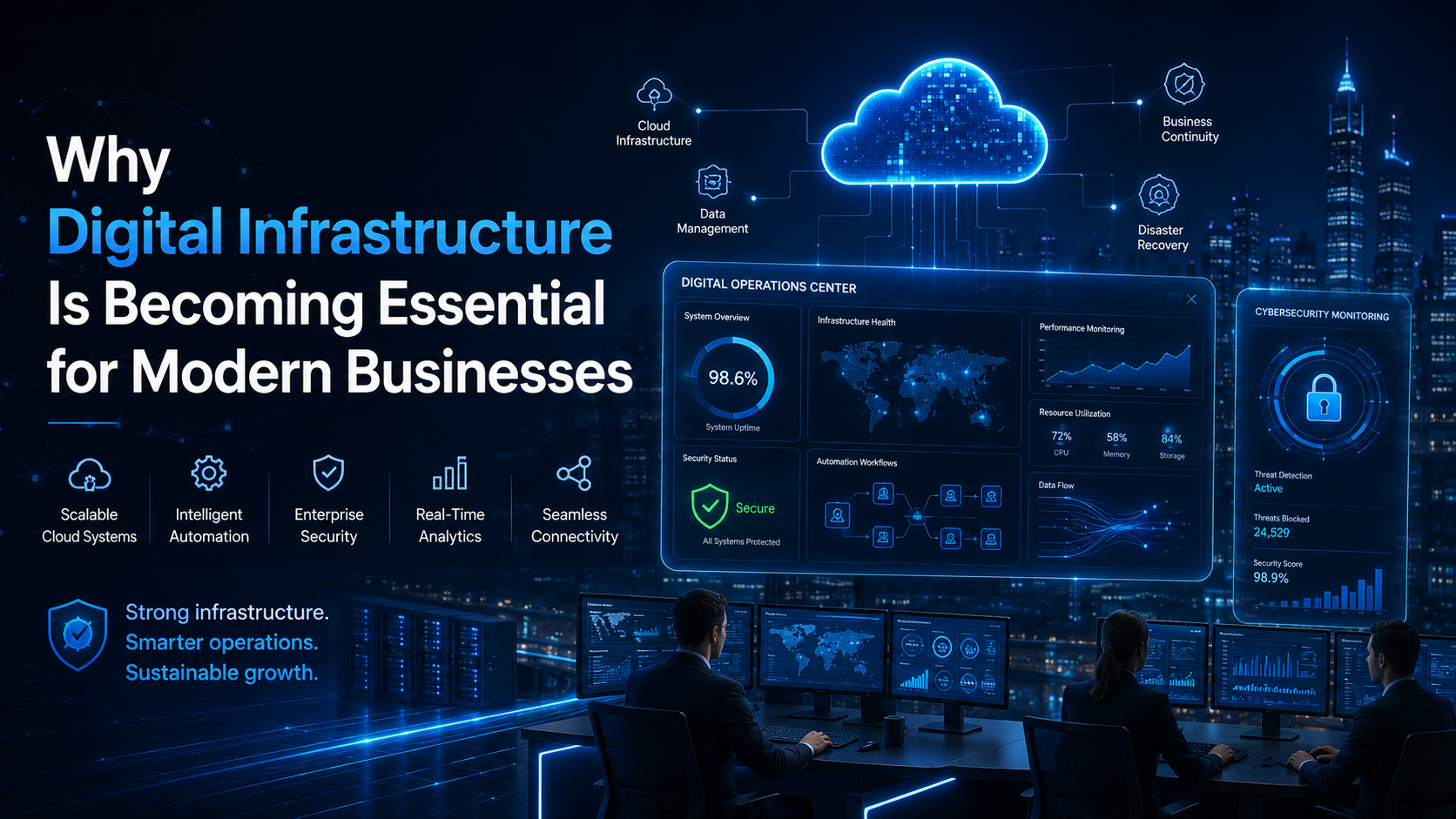
Why Digital Infrastructure Is Becoming Essential for Modern
Modern businesses need strong digital infrastructure to improve operational efficiency, scalability, security, automation, and long-term digital growth.
Introduction
Modern businesses are rapidly evolving in response to digital transformation, changing customer expectations, and technology-driven operational demands. In 2026, businesses are no longer competing only through products or services — they are also competing through efficiency, scalability, digital capability, and technological adaptability.
At the center of this transformation is digital infrastructure.
Digital infrastructure has become the foundation supporting modern business operations, communication, customer engagement, automation, data management, and long-term scalability.
Businesses with strong digital infrastructure are better positioned to:
- improve efficiency,
- support growth,
- adapt to technological changes,
- and maintain competitiveness in digital markets.
Organizations lacking modern digital systems often struggle with:
- operational inefficiencies,
- poor scalability,
- security vulnerabilities,
- disconnected workflows,
- and limited digital growth capabilities.
As businesses increasingly depend on digital ecosystems, investing in reliable infrastructure is becoming essential rather than optional.
What Is Digital Infrastructure?
Digital infrastructure refers to the technology systems, platforms, networks, software, and digital environments that support business operations and digital activities.
It includes:
- websites,
- cloud systems,
- hosting infrastructure,
- databases,
- communication systems,
- automation tools,
- cybersecurity,
- CRM platforms,
- APIs,
- and operational software solutions.
Digital infrastructure acts as the backbone of modern business technology ecosystems.
Strong infrastructure helps businesses operate more efficiently while supporting scalability, security, automation, and digital transformation initiatives.
Why Digital Infrastructure Matters for Businesses
Modern businesses rely heavily on digital systems for:
- communication,
- operations,
- customer engagement,
- marketing,
- collaboration,
- and data management.
Without reliable digital infrastructure, businesses may experience:
- slow operations,
- poor customer experiences,
- workflow inefficiencies,
- security risks,
- and limited scalability.
Strong digital infrastructure improves:
- operational reliability,
- business continuity,
- system performance,
- and customer satisfaction.
Businesses investing in modern infrastructure create stronger foundations for long-term growth.
Digital Infrastructure Improves Operational Efficiency
Efficient operations are critical for business productivity and scalability.
Digital infrastructure helps streamline:
- workflows,
- communication,
- collaboration,
- automation,
- and operational management.
Businesses using integrated digital systems reduce:
- manual processes,
- repetitive tasks,
- delays,
- and operational complexity.
Automation and centralized systems improve:
- productivity,
- speed,
- and resource optimization.
Operational efficiency allows businesses to focus more effectively on growth and customer service.
Scalability Requires Strong Infrastructure
As businesses grow, operational demands increase significantly.
Modern infrastructure supports scalability by enabling businesses to:
- manage larger workloads,
- handle increased traffic,
- integrate new systems,
- and support expanding operations.
Cloud-based infrastructure and scalable digital systems help businesses adapt more efficiently to growth without major operational disruptions.
Businesses lacking scalable infrastructure often face:
- system limitations,
- performance issues,
- and operational bottlenecks.
Scalable infrastructure supports sustainable long-term business expansion.
Digital Infrastructure Supports Customer Experience
Customer experience has become a major competitive factor in modern business.
Customers expect:
- fast websites,
- reliable digital services,
- secure interactions,
- smooth communication,
- and responsive experiences.
Digital infrastructure directly affects:
- website performance,
- system reliability,
- communication efficiency,
- and online accessibility.
Businesses with modern infrastructure provide stronger digital experiences that improve:
- trust,
- engagement,
- and customer satisfaction.
Cloud Technology Is Transforming Businesses
Cloud infrastructure has become one of the most important components of digital transformation.
Cloud systems provide businesses with:
- flexibility,
- scalability,
- remote accessibility,
- and centralized data management.
Cloud-based solutions improve:
- operational agility,
- collaboration,
- system accessibility,
- and infrastructure efficiency.
Businesses increasingly use cloud technology for:
- hosting,
- storage,
- CRM systems,
- project management,
- and operational software.
Cloud infrastructure supports modern hybrid and remote business environments effectively.
Cybersecurity Is a Critical Infrastructure Component
As businesses become more digital, cybersecurity risks also increase.
Weak infrastructure can expose businesses to:
- data breaches,
- cyberattacks,
- operational disruptions,
- and reputation damage.
Modern digital infrastructure must include:
- secure hosting,
- encrypted systems,
- access controls,
- backups,
- and cybersecurity protocols.
Strong security infrastructure protects:
- business operations,
- customer data,
- and digital trust.
Cybersecurity has become essential for long-term business stability.
Digital Infrastructure Enables Automation
Business automation depends heavily on integrated digital infrastructure.
Automation systems help businesses:
- streamline workflows,
- improve productivity,
- reduce manual work,
- and optimize operations.
Modern infrastructure supports:
- CRM automation,
- marketing automation,
- workflow management,
- AI-powered systems,
- and operational integration.
Businesses adopting automation technologies require scalable infrastructure to support intelligent digital ecosystems.
Integrated Systems Improve Business Management
Disconnected systems often create inefficiencies and communication problems.
Integrated digital infrastructure helps businesses connect:
- websites,
- CRM platforms,
- analytics,
- communication tools,
- automation systems,
- and operational software.
Integrated ecosystems improve:
- data flow,
- operational visibility,
- collaboration,
- and decision-making.
Businesses with connected systems operate more efficiently and scale more effectively.
Digital Infrastructure Supports Remote Operations
Modern businesses increasingly operate through hybrid and remote environments.
Reliable digital infrastructure enables:
- remote collaboration,
- cloud accessibility,
- secure communication,
- and operational continuity.
Businesses with strong infrastructure adapt more effectively to changing work environments and operational models.
Remote-capable infrastructure has become essential for modern organizational flexibility.
Data Management and Analytics Depend on Infrastructure
Businesses generate large amounts of operational and customer data.
Digital infrastructure supports:
- data storage,
- analytics,
- reporting,
- and intelligent decision-making.
Modern businesses use analytics systems to:
- monitor performance,
- understand customer behavior,
- improve operations,
- and optimize strategies.
Reliable infrastructure ensures accurate and secure data management.
Businesses Without Infrastructure Face Competitive Risks
Businesses lacking modern digital infrastructure may struggle with:
- poor operational efficiency,
- outdated systems,
- weak scalability,
- reduced competitiveness,
- and slower digital transformation.
As technology adoption accelerates, infrastructure quality increasingly affects:
- business performance,
- customer trust,
- and market positioning.
Businesses investing early in scalable infrastructure gain long-term competitive advantages.
Digital Infrastructure Supports Future Innovation
Future business technologies such as:
- AI,
- automation,
- cloud ecosystems,
- predictive analytics,
- and smart business systems
all depend on strong digital infrastructure.
Businesses planning long-term innovation must first establish reliable digital foundations.
Infrastructure readiness determines how effectively businesses can adopt future technologies and scale digital operations.
Conclusion
Digital infrastructure has become one of the most important foundations of modern business growth, scalability, security, and operational efficiency. Businesses operating with outdated or weak infrastructure often struggle to compete effectively in increasingly digital markets.
Modern organizations require scalable digital systems capable of supporting:
- automation,
- customer experience,
- cloud operations,
- cybersecurity,
- analytics,
- and future technological growth.
Businesses investing strategically in digital infrastructure position themselves for stronger operational performance, improved competitiveness, and long-term digital transformation success.
NexivaGen Technologies helps businesses build scalable digital infrastructure solutions designed for operational efficiency, automation, cloud integration, security, and sustainable business growth.
Frequently Asked Questions
Frequently Asked Questions (FAQ)
What is digital infrastructure?
Digital infrastructure refers to the technology systems and platforms supporting business operations, communication, automation, and digital services.
Why is digital infrastructure important for businesses?
It improves efficiency, scalability, customer experience, security, and operational reliability.
What technologies are included in digital infrastructure?
Websites, cloud systems, hosting, CRM platforms, databases, automation tools, cybersecurity, and operational software.
How does digital infrastructure support business growth?
Strong infrastructure helps businesses scale operations, automate workflows, improve performance, and support future technologies.
What is cloud infrastructure?
Cloud infrastructure refers to digital systems hosted and managed through cloud-based environments for flexibility and scalability.
Why is cybersecurity important in digital infrastructure?
Cybersecurity protects business systems, customer data, and operations from cyber threats and security risks.
Can small businesses benefit from digital infrastructure?
Yes. Scalable digital systems help SMEs improve efficiency, automation, and long-term growth capabilities.
How does infrastructure support automation?
Automation systems rely on integrated digital infrastructure to streamline workflows and business operations.