Why Mobile-Friendly Websites Drive Business Growth
A mobile-friendly website improves search rankings, customer experience, engagement, and conversions while helping businesses attract more customers and support long-term growth.
Introduction
The way customers interact with businesses has changed dramatically over the last decade. Today, smartphones have become the primary tool people use to search for products, compare services, read reviews, and contact businesses.
For many organizations, the majority of website visitors now come from mobile devices rather than desktop computers.
This shift has transformed how websites should be designed and optimized.
A mobile-friendly website is no longer a luxury or an optional feature. It has become an essential requirement for businesses that want to improve customer experience, increase online visibility, generate more leads, and support long-term growth.
Businesses that fail to provide a smooth mobile experience risk losing potential customers before meaningful engagement even begins.
As mobile internet usage continues increasing, organizations must prioritize mobile website optimization to remain competitive in today's digital environment.
What Is a Mobile-Friendly Website?
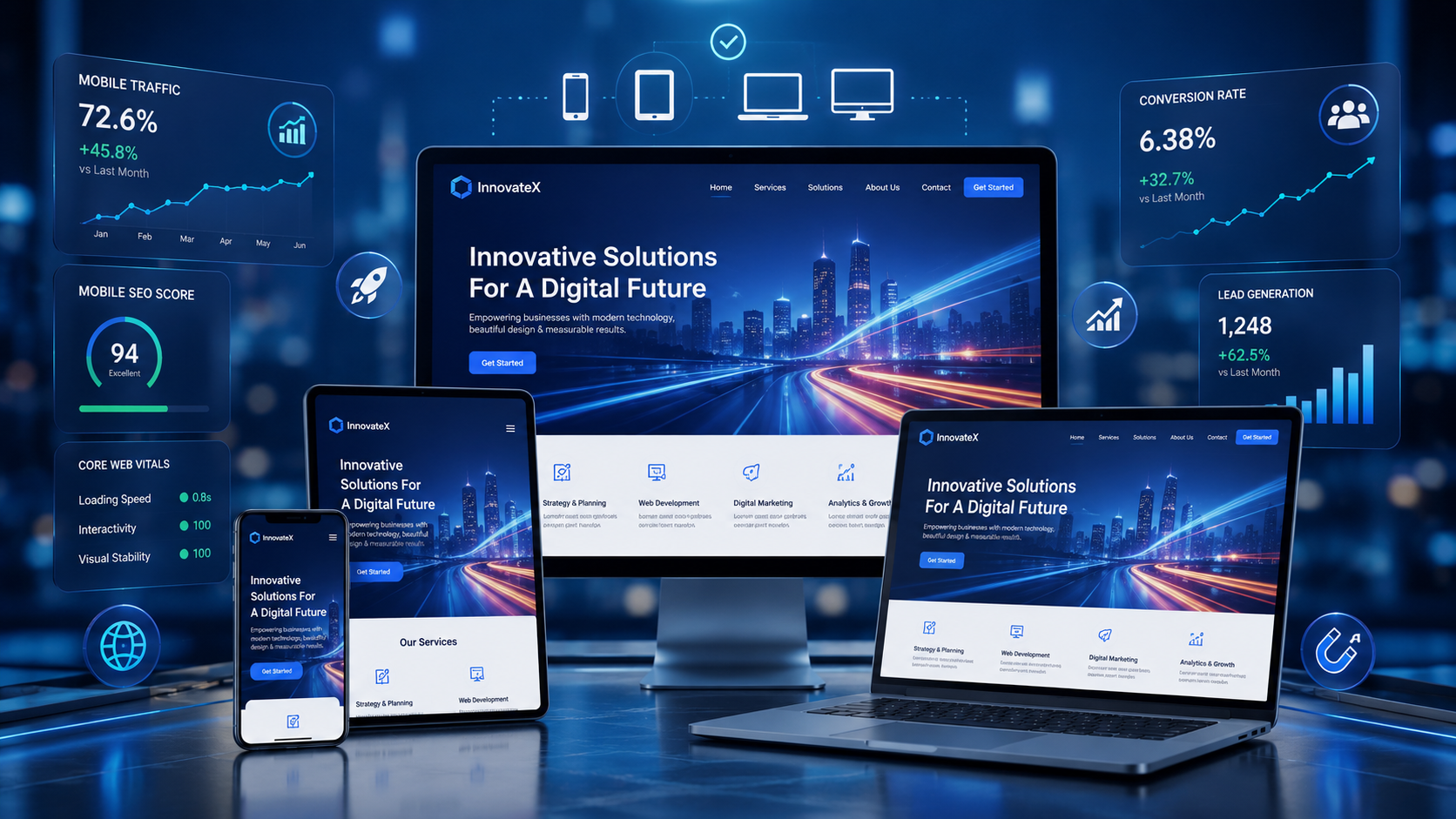
A mobile-friendly website is designed to function effectively across smartphones, tablets, laptops, and desktop devices.
Responsive website design automatically adjusts content, layouts, images, and navigation to match different screen sizes.
A well-optimized mobile website offers:
- Easy navigation
- Fast loading speed
- Readable content
- Responsive layouts
- Touch-friendly buttons
- Optimized images
- Consistent user experience
The goal is to provide visitors with a seamless experience regardless of the device they use.
Mobile Usage Continues to Grow
Consumer behavior has become increasingly mobile-focused.
People use smartphones to:
- Search for businesses
- Read reviews
- Compare providers
- Request quotations
- Book appointments
- Make purchasing decisions
Many local and service-related searches occur directly from mobile devices.
When users encounter websites that are difficult to navigate on mobile screens, they often leave immediately and continue searching elsewhere.
Businesses that prioritize mobile optimization are better positioned to capture and retain customer attention.
Google Prioritizes Mobile-Friendly Websites
Google introduced mobile-first indexing to ensure search rankings reflect mobile user experiences.
This means Google primarily evaluates the mobile version of a website when determining rankings.
Websites that perform poorly on mobile devices may experience:
- Reduced search visibility
- Lower rankings
- Decreased traffic
- Higher bounce rates
Mobile website SEO has become a fundamental ranking factor.
Businesses investing in responsive design often benefit from stronger search performance and improved visibility.
Mobile-Friendly Websites Improve User Experience
User experience plays a major role in customer engagement and conversion rates.
Visitors expect websites to:
- Load quickly
- Display correctly
- Function smoothly
- Provide clear navigation
Poor mobile experiences often create frustration.
Common problems include:
- Small text
- Broken layouts
- Difficult navigation
- Slow loading pages
These issues can discourage visitors from exploring services or contacting the business.
A positive mobile experience encourages visitors to stay longer and engage more deeply.
Mobile Optimization Supports Customer Trust
Trust begins with first impressions.
When customers visit a website, they quickly evaluate its professionalism and usability.
A modern mobile-friendly website creates confidence by demonstrating:
- Professionalism
- Reliability
- Attention to detail
- Commitment to customer experience
Businesses with outdated mobile experiences may appear less credible.
Strong website performance helps establish trust and improve customer perception.
Faster Mobile Websites Improve Engagement
Website speed directly influences user behavior.
Mobile users expect pages to load within seconds.
Slow websites often result in:
- Higher bounce rates
- Reduced engagement
- Lost opportunities
Mobile optimization improves speed through:
- Image compression
- Efficient coding
- Optimized hosting
- Caching technologies
Faster websites typically achieve better engagement and stronger conversion performance.
Mobile-Friendly Websites Generate More Leads
The purpose of a business website is often to generate inquiries and sales opportunities.
Mobile-friendly websites make it easier for visitors to:
- Submit forms
- Request consultations
- Contact businesses
- Explore services
Reducing friction improves conversion rates.
When users can interact with a website comfortably, they are more likely to take action.
Lead generation improves when customer journeys are simple and efficient.
Responsive Design Improves Accessibility
Accessibility is an important component of website performance.
Responsive websites ensure content remains usable across different devices and screen sizes.
This improves:
- Customer satisfaction
- Accessibility
- Engagement
- User retention
Businesses that provide accessible experiences can reach broader audiences and improve overall effectiveness.
Mobile Websites Support Local SEO
Many mobile searches have local intent.
Examples include:
- Website development company near me
- SEO services near me
- IT consultant near me
Mobile-friendly websites support local SEO by improving usability and engagement metrics.
Local businesses often benefit significantly from mobile optimization because many customers discover services through mobile searches.
Mobile-Friendly Websites Prepare Businesses for the Future
Technology continues evolving rapidly.
Future innovations such as:
- AI-powered tools
- Voice search
- Advanced personalization
- Automation
will increasingly rely on strong digital foundations.
Mobile-friendly websites provide flexibility and scalability that support future growth.
Businesses investing in modern website development today create stronger opportunities for tomorrow.
Conclusion
Mobile-friendly websites have become essential business assets.
They improve search rankings, strengthen customer trust, enhance user experience, support lead generation, and create foundations for long-term growth.
As mobile internet usage continues increasing, businesses that prioritize mobile website optimization position themselves for greater visibility and stronger customer engagement.
Organizations that invest in responsive design and mobile SEO are better equipped to compete in an increasingly mobile-first digital landscape.
A mobile-friendly website is not simply a technical upgrade—it is a strategic investment in business growth.
Frequently Asked Questions
FAQ Section
What is a mobile-friendly website?
A mobile-friendly website adapts to different screen sizes and provides a seamless experience across devices.
Why is mobile optimization important?
Mobile optimization improves user experience, search rankings, engagement, and lead generation.
What is mobile-first indexing?
Mobile-first indexing means Google primarily evaluates the mobile version of a website when determining rankings.
How does mobile SEO improve rankings?
Mobile SEO improves usability, performance, and user experience, helping websites rank more effectively.
What is responsive website design?
Responsive design automatically adjusts website layouts to fit different devices and screen sizes.
Can mobile-friendly websites increase leads?
Yes. Mobile-friendly websites improve usability and make it easier for visitors to contact businesses.
Does website speed affect mobile SEO?
Yes. Faster websites generally provide better user experiences and stronger SEO performance.
Why do businesses need responsive websites?
Responsive websites improve accessibility, engagement, and consistency across devices.
How does mobile optimization support local SEO?
Mobile-friendly websites improve user experience for local searches and can support better local visibility.
Should small businesses invest in mobile-friendly websites?
Absolutely. Mobile optimization helps businesses attract customers, improve rankings, and compete effectively online.